
Can a 5000W Solar Generator Run My Essential Appliances?
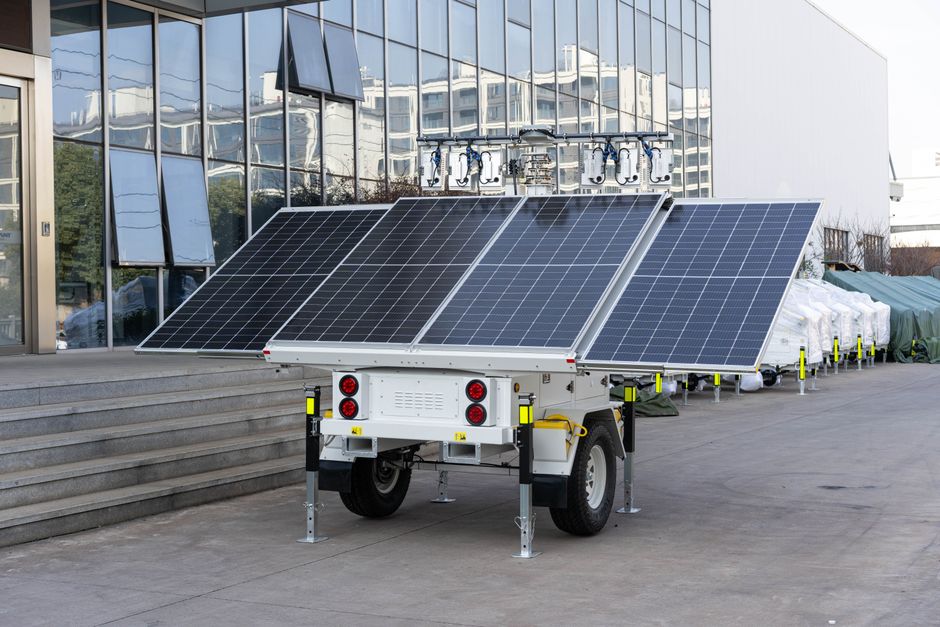
A 5000W solar generator can run essential appliances only when their combined continuous load stays below its continuous output rating, their startup surges fit within its peak rating, and each appliance matches the available voltage. Battery capacity sets runtime: a 5000W rating alone does not tell you how long the station can power a refrigerator, microwave, lights, or air conditioner.
Can a 5000W solar generator run a refrigerator, microwave, and lights at the same time?
Yes, potentially, but only after you run a label-first load check. Do not treat 5000W as a permission slip. Treat it as a ceiling with three separate tests: continuous watts, startup surge, and circuit voltage.
The U.S. Department of Energy's Federal Energy Management Program worksheet provides useful planning examples: a 1,200W microwave used for 0.25 hour uses 300 watt-hours, while an efficient 19-cubic-foot refrigerator listed at 64W for 12 hours uses 768 watt-hours. Those are energy-planning examples, not a substitute for your appliance labels. The same guide says nameplate ratings are generally maximum design limits and may be two to four times actual use, so measured consumption is preferable when available.
Use the appliance's nameplate first. If it shows amps rather than watts, multiply amps by volts to estimate watts. Mississippi State University Extension gives the inverse version of the same check: watts divided by volts gives amps, which helps you keep a 120V circuit below its breaker capacity.
| Load-planning item | Illustrative figure from DOE | What it answers |
|---|---|---|
| Microwave | 1,200W for 0.25 hour = 300Wh | Short, high-power energy use |
| Efficient 19-cubic-foot refrigerator | 64W for 12 hours = 768Wh | Longer-running energy use |
| 1/2-hp centrifugal water pump | 1,280W for 0.5 hour = 640Wh | Motor load plus limited daily run time |
Now run the two-column check. In column one, list every item that may run at once and add its running watts. In column two, mark every motor load that may start while the others are already on. A conventional refrigerator is the common trap: Sandia National Laboratories reports that its starting current is typically three times its running current, and that startup can recur periodically even when no one is using the refrigerator.
Start the largest motor first, let it reach operating speed, then add smaller loads. That sequence follows North Dakota State University guidance and reduces the chance that multiple surges collide. For perspective, NDSU estimates that a home using a water pump, refrigerator, freezer, gas-furnace blower, and a few lights may need about 5,000W at startup but about 2,000W continuously. Peak is the moment that breaks the plan. Continuous load is the number that keeps it alive.
Will a 5000W solar generator run a window air conditioner?
It can only run a window air conditioner if the unit's voltage, running requirement, and startup demand all fit the specific power station's published limits. The 5000W number cannot answer that on its own. A room air conditioner has a motor, and motor startup must be planned as a separate event from normal operation.
Check the air conditioner's nameplate for volts and amps or watts, then check the power station manual for continuous output, surge output, outlet voltage, and per-outlet limits. Mississippi State University Extension states that household AC equipment operates at either 120 or 240 volts and warns that substantial voltage variation can damage equipment. A 120V appliance needs compatible 120V output; a 240V appliance needs compatible 240V output. Matching watts while missing voltage is still a failed match.
Use this decision script: "The label says this appliance needs [volts] and [amps or watts]. The station supplies [volts], supports [continuous watts], and allows [surge watts]." Fill in those blanks from the actual labels. If any blank does not fit, leave the air conditioner off and protect the essentials instead.
Efficiency helps battery duration, but it does not erase startup requirements. The 2024 ENERGY STAR reference guide says certified room air conditioners use about 20% less energy than conventional models. That is an energy-use comparison over time, not proof that any particular unit will start on any particular solar generator.
Keep the air conditioner in its own scenario. Do not quietly add it to a refrigerator, microwave, lights, router, and fan plan, then assume the label rating covers the pile. The recipient here is the battery and inverter. Their cognitive load is simple: every simultaneous watt and every motor surge counts.
Why does a 5000W power station not run a 5000W appliance for long?
Because 5000W measures delivery rate, while battery capacity measures stored energy. A 5000W power station can be capable of delivering 5000W and still have a battery that lasts only a short time at that load. Power decides whether the appliance can run now. Watt-hours decide when it stops.
The DOE's core calculation is direct: load watts multiplied by operating hours equals load watt-hours. The National Laboratory of the Rockies makes the same distinction in its residential battery model, pairing 5kW of power capacity with 12.5kWh of energy capacity. Before conversion losses and reserve capacity, 12.5kWh divided by a constant 5kW load is about 2.5 hours. That is the cleanest way to understand why a power rating is not a runtime promise.
Build an essentials-only worksheet before an outage. List each item, its label watts, how many hours you expect it to run, and its watt-hours. Then make a separate line for items that create startup surge. This is also useful if backup power supports a small work operation, where equipment decisions already compete for cash and attention; the same discipline behind choosing whether to rent, finance, or buy equipment applies here: compare the actual requirement, not the headline number.
- Read the label. Record volts, amps, watts, and any stated startup or peak requirement.
- Sort by role. Put refrigerator, communications equipment, lighting, and necessary fans in the essentials column. Put comfort or convenience loads in a separate column.
- Add simultaneous running watts. Keep the total below the generator's continuous rating and circuit-breaker capacity.
- Stage motor loads. Start the largest motor first, then add loads after it reaches operating speed.
- Calculate watt-hours. Multiply each planned load by expected operating time, then compare the total with the battery's usable capacity.
The homework is practical. Photograph the labels on the appliances you would use in an outage, write one running-watt total and one startup-surge scenario, and verify each appliance's voltage against the generator manual. That five-minute worksheet gives you an answer a marketing label cannot.
Frequently Asked Questions
What is the difference between a generator's watt rating and its watt-hour battery capacity?
Watts describe how much power the generator can deliver at one moment, while watt-hours describe how much energy its battery stores over time. DOE defines daily energy demand as load watts multiplied by operating hours. A system can have enough watts to start an appliance but too few watt-hours to run it for the outage duration you need.
How much startup surge does a refrigerator or sump pump need?
The exact surge requirement comes from the appliance and generator specifications, so public guidance cannot supply one universal number for every refrigerator or sump pump. Sandia says a conventional refrigerator's starting current is typically three times its running current, while NDSU says motors can need about four times as much power to start as to run. Check both the appliance label and the power station's peak or surge rating before connecting a motor.
Can a 5000W solar generator run central air conditioning or a well pump?
It depends on the equipment's voltage, running load, startup demand, and the generator's continuous and surge specifications. NDSU notes that homes commonly use 120/240-volt service and that a backup source must match the load's required voltage and frequency. A 5000W label is not enough evidence by itself; verify the appliance nameplate and the station's 120V or 240V output before relying on it.
Sources
- North Dakota State University Agriculture: Standby Electric Generators
- U.S. Department of Energy Federal Energy Management Program: Photovoltaic Systems
- Sandia National Laboratories and U.S. Department of Energy Office of Indian Energy: Refrigeration Units
- National Laboratory of the Rockies: Residential Battery Storage
- ENERGY STAR: 2024 Quick Reference Guide
- Mississippi State University Extension Service: Generator Safety Guidance